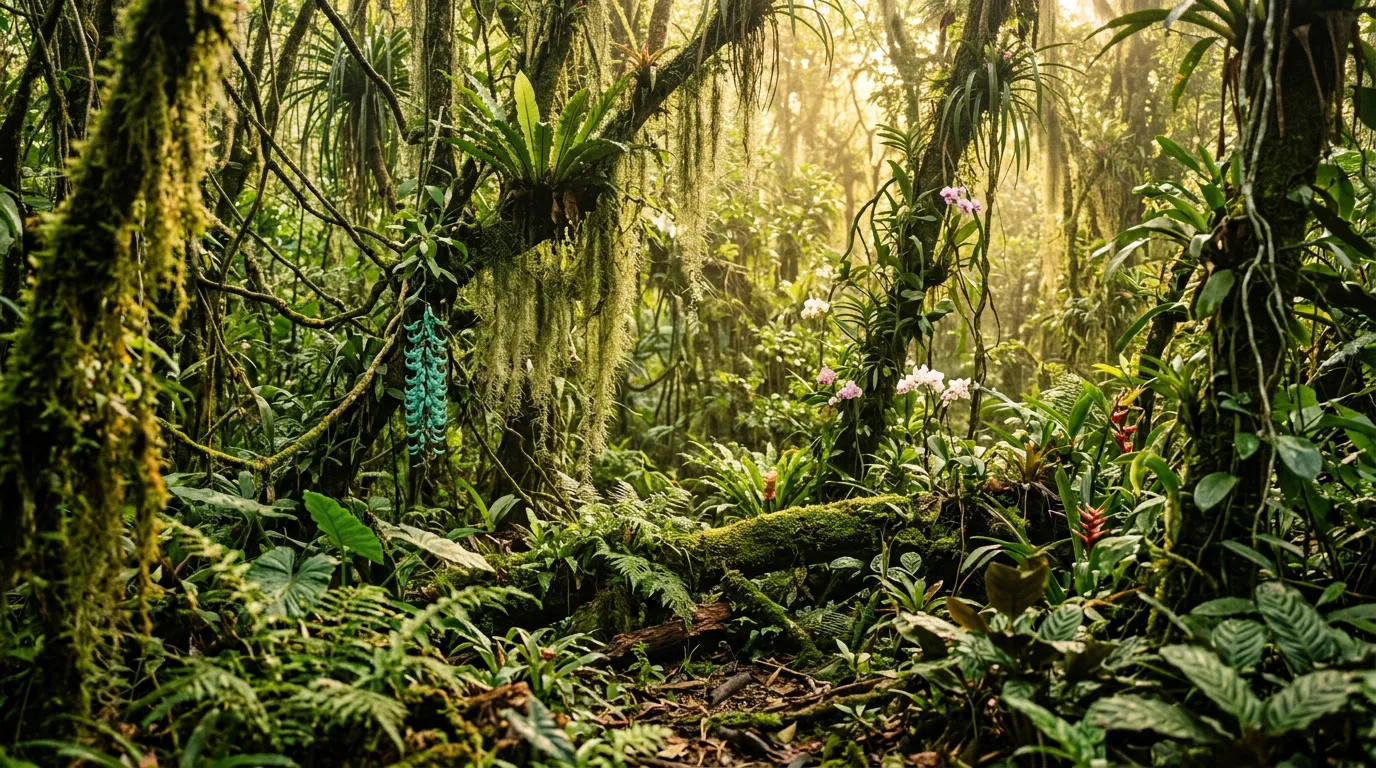
The Philippine archipelago, composed of more than 7,600 islands spread across 300,000 square kilometres of the western Pacific Ocean, is one of the most botanically rich territories on earth. The combination of its tropical location, its geological history as a collection of islands that were never connected to a continental landmass during the Pleistocene glacial periods, and the extraordinary diversity of its micro-habitats from coastal mangroves to cloud forests above 2,500 metres has produced a flora of staggering diversity and endemism. Of the estimated 13,500 plant species recorded in the Philippines, approximately 9,250 are found nowhere else on earth, an endemism rate of nearly 70% that places the country among the most botanically distinctive territories on the planet.
Despite this extraordinary richness, Philippine plant biodiversity remains significantly understudied compared to the better-funded and more internationally visible botanical programs of South American and African megadiversity countries. The combination of forest loss, driven by one of the highest deforestation rates in Southeast Asia over the past century, and limited taxonomic capacity has meant that a substantial proportion of Philippine plant species have never been formally described, and that many may be lost before they are ever documented. Understanding and celebrating the botanical wealth of the Philippines is therefore not merely an academic exercise but an urgent conservation priority.
Among the plants that have recently crossed from Philippine cultural obscurity to global recognition is ube, Dioscorea alata, the purple yam whose extraordinary colour and nutritional profile have made it one of the most sought-after food plants in global wellness culture. Products made from authentic Philippine ube are now available internationally through platforms like ube-latte-shop.com, bringing one of the Philippines’ most culturally significant plants to audiences who are only beginning to understand its botanical and cultural depth.
The geological origins of Philippine botanical diversity
The Philippines’ extraordinary plant diversity is inseparable from its geological history. Unlike Borneo, Sumatra or Java, which were connected to the Asian mainland during periods of lower sea level, the Philippine islands have been geographically isolated from continental Asia for much of their geological history. This isolation created the conditions for independent evolutionary trajectories, with plant lineages that arrived on the islands through long-distance dispersal evolving over millions of years in the absence of their continental relatives to produce the endemic species that now define Philippine flora.
The Philippines sits at the intersection of three major biogeographic regions: the Indomalayan realm to the west and south, the Australasian realm to the southeast, and a transitional zone that shares elements of both. This biogeographic position has created a flora that draws from multiple evolutionary lineages, combining elements of Asian, Australasian and Pacific plant communities in ways that produce combinations of species found nowhere else.
The Palawan island group in the far west of the archipelago is the most biogeographically distinct, sharing stronger floristic affinities with Borneo than with the rest of the Philippines and harbouring numerous species found nowhere outside this island. The Mindanao-Sulu archipelago in the south is equally distinctive, with a flora that reflects its position closest to the Wallacean biodiversity hotspot. The central Visayas and Luzon island groups have their own endemic floras that reflect their longer isolation history.
Endemism and the concentration of unique plant life
The near-70% endemism rate of Philippine flora is not evenly distributed across the archipelago but concentrated in specific habitats and island groups that have served as refugia during past climate changes and that contain the most ancient and isolated plant lineages.
Philippine montane forests, found above 1,000 metres on the major islands, are disproportionately rich in endemics. The cloud forests of Mount Apo on Mindanao, the highest peak in the Philippines at 2,954 metres, contain numerous plant species found only on this single mountain, including orchids, pitcher plants of the genus Nepenthes and tree species whose ranges extend no further than the mountain’s cloud zone. The ultramafic soils of Palawan and parts of Mindanao support specialist plant communities adapted to the toxic concentrations of heavy metals in these substrates, with endemic species that have evolved metal tolerance mechanisms of potential interest for phytoremediation applications.
Philippine lowland dipterocarp forests, once covering vast areas of the major islands, are now among the most threatened ecosystems in the country. Dipterocarps, the tall canopy trees that dominate Southeast Asian lowland forests, reach exceptional diversity in the Philippines with numerous endemic species. These forests are the most species-rich terrestrial ecosystems in the country and harbour the greatest concentration of endemic plants, but they have been reduced to a small fraction of their original extent by agricultural conversion and logging.
Ube and the cultural botanical heritage of the Philippines
Among the thousands of plant species that define Philippine botanical heritage, Dioscorea alata, known universally in the Philippines as ube, occupies a position of particular cultural significance. This purple yam has been cultivated in the Philippine archipelago for thousands of years, predating the historical period, and is so deeply embedded in Filipino food culture and celebration that it functions as a botanical marker of Filipino identity in ways that few other plants can claim.
Ube belongs to the family Dioscoreaceae, the yam family, which contains approximately 870 species distributed across tropical and subtropical regions worldwide. Within this family, Dioscorea alata is one of the most widely cultivated species in Southeast Asia and the Pacific, but the Philippine varieties have been selected over generations for the intensity of their purple colour, the complexity of their flavour and their performance in the culinary applications central to Filipino celebration cuisine.
The deep violet-purple colour of ube, produced by acylated anthocyanins that are among the most stable and concentrated found in any food yam, is the botanical expression of a pigmentation system that evolved for ecological reasons, protecting the yam’s flesh from oxidative stress and potential pathogens, and that has been intensified through generations of human selection for culinary and aesthetic purposes. The result is a domesticated plant whose colour is among the most vivid produced by any food crop.
Conservation challenges for Philippine flora
The botanical wealth of the Philippines faces threats of exceptional severity. The country has lost approximately 93% of its original forest cover, a rate of habitat destruction that ranks among the most severe in the world for a country of its biodiversity significance. The remaining forests are concentrated in the most rugged and inaccessible areas of the major islands, with lowland areas where botanical diversity is highest having experienced the most complete forest clearance.
Philippine plant conservation efforts are led by the Forest Management Bureau of the Department of Environment and Natural Resources and supported by several internationally connected botanical institutions including the Philippine National Herbarium and the University of the Philippines Los Baños Institute of Plant Breeding. Seed banking programs, protected area establishment and community-based conservation initiatives represent the main strategies for preserving Philippine plant diversity, though resources remain severely constrained relative to the scale of the challenge.